Using our app for mobile banking

There have been recent reports of biometric (IOS Face ID/Touch ID & Android Fingerprint) errors with some users.

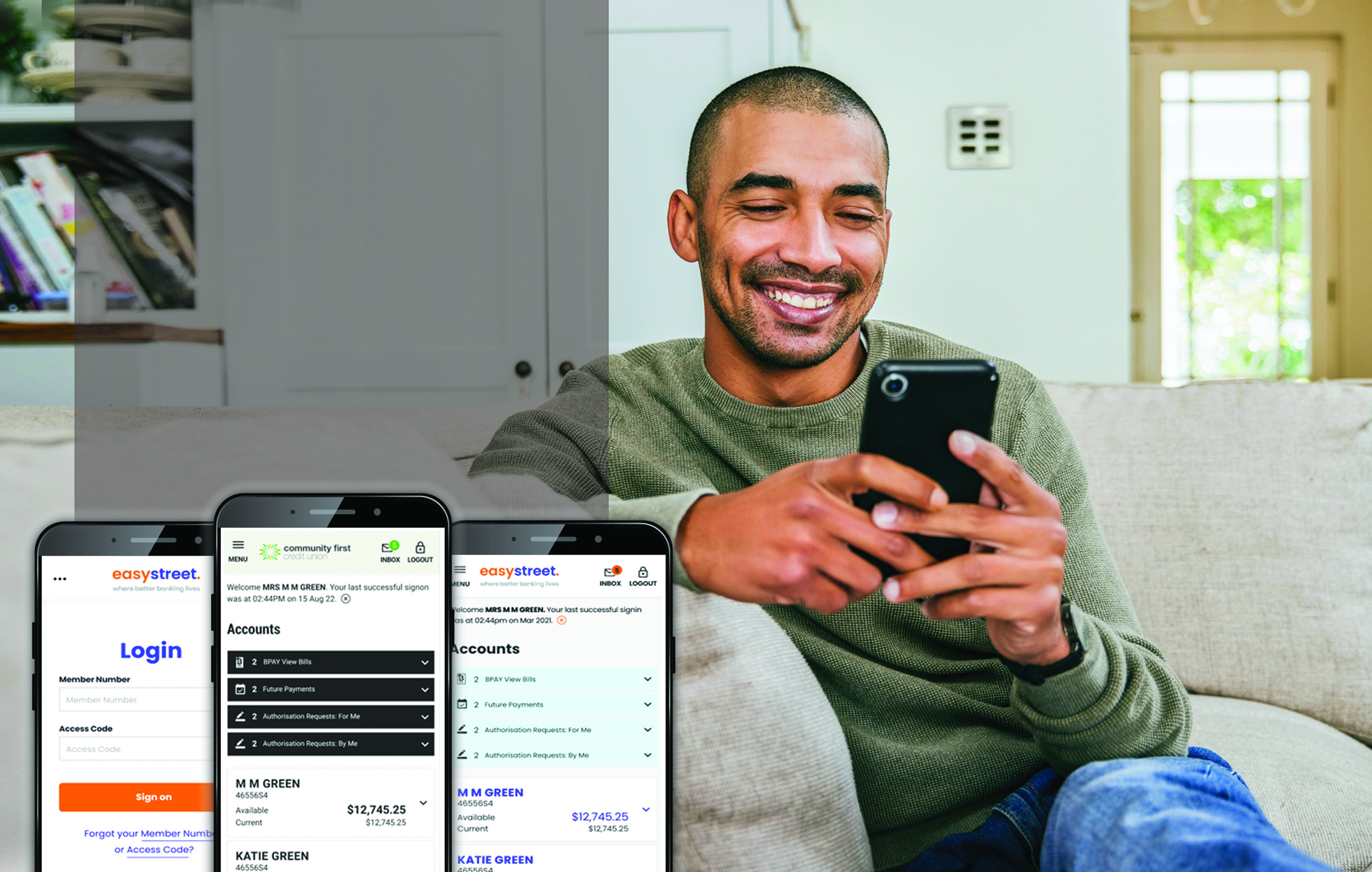
Using our mobile banking app 

In mid September, Apple devices are expected to be due for an operating system update to iOS17. When iOS17 becomes available, it’s entirely up to you if and when you apply the update.

We always advocate that you ensure you upgrade to the latest version of your phone’s operating system to ensure you get the highest available level of security and functionality.

What to do if you experience issues using our app
There have been recent reports of biometric (IOS Face ID/Touch ID & Android Fingerprint) errors with some users operating the mobile banking app. If you experience any issues using our app, we recommend you delete and re-download the app.

You will then need to re-register the app using your current Internet banking password. If you don’t know you current password, you can reset your password by selecting the “Forgot your Member Number or Password?” link under the Sign On button on Internet Banking or selecting “Forgot Password” on the login screen of our Mobile App after reinstallation.

Be aware that we’ve recently mandated stronger passwords including one-time passwords to access our Internet banking and mobile app services.

When changing your Internet banking password, you will need to select a password that complies with our strong password rules and authorise the change by entering a one-time password we will send to you via SMS to your mobile.

We’re here to help

If you need a hand with your banking access or using our app, give us a call on 1300 13 22 77 or visit your nearest store.

Enhanced security measures are now mandatory.

Over the past 6 months we’ve been working hard to uplift the security of our internet banking and mobile app to better protect our members.

These changes have included the introduction of one-time passwords and stronger password rules. Up until now, these enhanced security features have not been made mandatory however, as this creates unnecessary risk, we’ve made the decision to mandate the use of a one-time password to perform key functions via internet banking and the mobile app.

The password policy changes are now applicable to all members.


What is a One-Time Password?

An SMS ‘One-Time Password’ (OTP) will be sent to your mobile with a code that you’ll need to enter when you do things like changing your login access code or sending money to someone you haven’t paid before.

Please check we have your correct mobile number or contact us to have one added to your account if you don’t already.


We don’t recommend you share a mobile number with another person.

The OTP provides an important layer of security to help reduce the risk of unauthorized access so you should limit who has access to your mobile phone and ensure you protect it with a PIN or biometric at all times. Sharing login details, devices or contact details can compromise the security of your accounts and put your financial safety at risk.


What are my options if I don’t have a mobile number or don’t wish to provide one?

With fraud ever prevalent, the One-Time Password is a critical security feature to better protect your personal information and data. If you don’t have a mobile number, or chose not to provide one, your Internet Banking experience will not include full access to features you may use today. You can continue to access our online services but may encounter restrictions where the OTP is a mandatory requirement. We still offer a number of ways to bank including Bank@Post and our store network.

This makes it difficult for others, including scammers, to guess your password, who may use software to ‘guess’ common patterns of numbers.


Setting a stronger internet banking password.

The 6-digit number password you use during your internet banking login can now be replaced with a new password consisting of 8-39 characters, including a combination of characters from three of the four categories: numbers, uppercase and lowercase letters, and other special characters such as punctuations marks, mathematical and other conventional symbols except for ` ^ &

If you haven’t done so already, we strongly recommend that you change your password to take advantage of the stronger password feature. Please note that setting a stronger password will be mandatory in the event you change or have to reset your password for any reason.


We’re happy to help.

If you need a hand navigating any of these changes, please give us a call on 1300 13 22 77 or visit your nearest Community First store.

4 Facts to know about bridging loans

Making your next property move but need to sell your existing property first? Read about bridging loans to see if it’s right for you. 

Deciding to sell your current property and buy another one can present some challenges. Can you afford to buy before you sell? What if you find your dream home before you’ve sold your current home? Where will you live if you sell your current home and don’t find the right property right away?

A bridging loan can sometimes help. Bridging finance is a short-term loan that can help you buy the dream home you’ve just found while giving you up to 12 months to sell your existing home. Here’s 4 facts on bridging loans to give you an idea of how they work at Community First.

1. You have up to 12 months from the date of settlement of your new property to repay your Community First Bridging Loan

A bridging loan gives you up to 12 months of breathing space before it must be repaid. This allows you to complete the purchase of your new property, cover all purchase and moving costs and have time to prepare your existing home for sale.

It can minimise the stress and pressure to sell quickly – as well as the risk of missing out on your dream home.

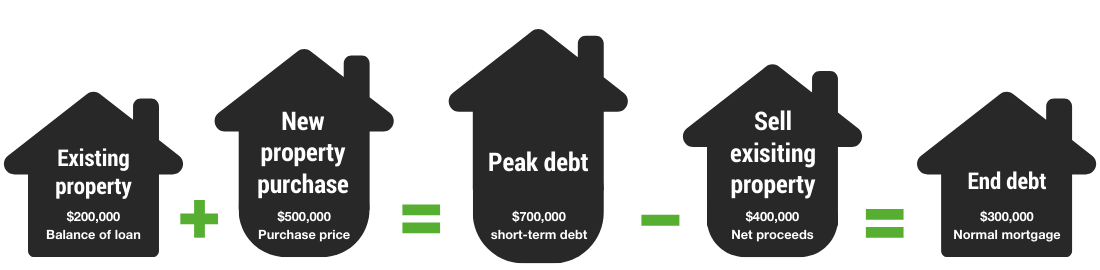
2. A bridging loan covers three components: peak debt, bridging loan and end debt

When committing to purchase a new property, any mortgage on your existing home, plus the purchase price of the new dwelling, legal and stamp duty costs, relocation costs and renovations to prepare the existing home for sale are added to establish the peak debt.

The potential sale price of your new property is then deducted from the peak debt and if there is a remaining balance, this portion becomes the end debt loan. However, not all borrowers will have an end debt loan if the sale of the existing property covers the purchase and costs of the new home e.g. if you are downsizing.


If applicable, two loans will be established at the time of funding:
• The Bridging Loan that will be paid out and closed once the existing property has been sold
• The End Debt Loan that commences immediately as a standard owner occupier mortgage

3. Bridging loans are interest only, with no repayments required monthly

A bridging loan takes away some cash-flow stress as the repayments are interest-only, and these are added to the balance outstanding each month until the loan is repaid. While some lenders require you to make repayments during the interest only period, at Community First, we don’t require you to do this as we simply deduct the value of accrued interest you’ve incurred during the bridging period from the proceeds of sale of your current home.

If you have an end debt loan, principal and interest (P&I) repayments are required as soon as the loan is established, which is also at the commencement of the bridging loan.

4. Affordability of a bridging loan is assessed on end debt, not peak debt

Affordability assessments of a bridging loan involve evaluating the borrowers’ end debt which is the mortgage on their new property – if they have one.

Assessment of the proposed end debt is completed just like every other loan product – the difference is that when considering existing debt obligations, the bridging loan is excluded from the assessment.


When establishing a bridging loan with Community First, the mortgage will be held by us and may be secured by both the existing and new property. Any existing home loans with another financial institution will be paid out and closed.

How to keep your credit score healthy

Your credit score can play a key role in helping you take out a loan or credit card – so it pays to nurture your number!

Each of us have a credit score – a number out of 1,000 or sometimes 1,200 that tells lenders and even service providers such as phone and power companies, how often you’ve sought out credit and how well you’ve managed debt and credit in the past.

What determines my credit score?

Your credit score is based on your personal credit history. Credit reference companies maintain a record of the different credit products you have, how many applications for credit or loans you’ve made, and how well you’ve kept up repayments.

It’s important to note that lenders will often apply other criteria to make a decision on whether or not to give you a loan – the credit score isn’t the only factor considered however it can play a big part.

Using a variety of scoring methods, the credit reference companies condense the details in your credit record to a score between 1-1,200. A credit score is measured from below average to excellent. A score between 1-509 is below average, 510-621 is average, 622-725 is good, 726-832 is very good and 833-1200 is excellent.


The higher your score, the better, as it tells lenders you have a good track record for managing credit.

How is your credit score calculated?

Your overall score is calculated from your personal and financial information that is recorded from lenders such as banks, credit unions and payday lenders 1 .

Canstar says that the information used to calculate your credit score includes your employment history, length at current address as well as what credit and loan products you have had previously, also when accounts have been opened and closed. The amount of credit or loan applications you have submitted is also considered, and whether you have been rejected from applications affects your record.

If you have applied for multiple credit products in a short period of time, this might flag that you are in credit stress which might negatively impact your total score. Another important factor that is considered is whether you have had any court judgments, bankruptcy or personal insolvency.

Be careful when clicking on links when scrolling through social media or looking at marketing emails promoting cheap loan or credit offers. When you click on these links, you are actually giving consent to the advertisers to perform a credit check on you. The next time you see a deal on these channels, you need to consider this and whether you would prefer to keep this information from them.

How can I check my credit score?

Easy! A number of online platforms let you check your score for free.

Head to sites like Credit Savvy, Illion Credit Check, Credit Simple or Finty to know your number. Taking a look at your score won’t impact either your score or your credit record.

How can I keep my credit score high?

Four easy steps can help your credit score stay in great shape:

1. Make payments on time

Credit scores take into account good behaviour like making debt repayments on time, as well as negative behaviour such as running late with payments.

Getting into the habit of making repayment by the due date will keep your credit score healthy.

Repeatedly falling behind with payments can put a few dents in your credit record. If you’re running late with payments, aim to make up the balance as soon as possible. Simply ignoring debt payments (known as a default) can do serious damage to your credit score.

2. Don’t take on more debt than you can handle

Overextending yourself with debt makes it a lot harder to stay on top of repayments. Keep life simple – and your credit score high, by limiting the amount of debt you take on.

3. Keep applications for credit to a minimum

Making multiple loan or credit applications can push your credit score down because it may suggest you’ve been knocked back by other lenders or are desperate for credit. It’s much better to shop around, and only apply for credit once you’ve found the product that’s right for your needs.

4. Go easy on buy now, pay later

Buy now pay later (BNPL) services may let credit reference companies know if you’re running behind with payments (and all other payments owed). The situation can become even more damaging to your credit score if your BNPL account is linked to a credit card, which could see your card issuer also report late payments. Again, it comes down to only making BNPL purchases that you’re confident you can pay off on time.

Your credit score can be a great asset when it comes to applying for low-rate loans or credit cards. Keep your score looking good, and it can help you achieve your goals!

Sources:

1 https://www.canstar.com.au/credit-score/credit-score-calculated/

5 tips for preparing to come off a fixed rate

Better prepare yourself for coming off a fixed rate period of your loan. Here are 5 tips to help you feel more confident and in control.

1. Make debts easier to manage

If you have extra debts like a credit card that you don’t pay off each month, consider consolidating it into your home loan. By switching from multiple repayments to one simple one over the term of your home loan, it could help make managing your commitments a little easier and potentially free up some cash. You could also look to switch it out into a personal loan with terms that might suit you better.

Another alternative is to split the home loan so your consolidated debts can be paid off over a shorter term than your home loan*.

2. Avoid touching your redraw

If you’ve made progress on paying extra off your home loan, then that’s great news. Now’s the time when you’ll really benefit, as you’ll pay interest on a smaller balance which can help you pay it down sooner. Try and enjoy the benefits of your hard work for as long as possible by avoiding touching the money in your redraw.

Another option if you’re in advance by a decent amount is to use your redraw to effectively pay down your loan balance. It means the redraw would no longer be available however your minimum monthly repayment would reduce.

3. Stash your cash

If you’ve got some spare cash, don’t spend it now. Consider putting it aside to save for the proverbial rainy day. Hold off on making bigger purchases, such as upgrading your car or booking a holiday to help you put away some savings. Most of Community First’s home loans come with a 100% offset account, including fixed loans.

Another tip is to try and understand what your new mortgage repayments could look like and start adjusting now, by adding the difference to your home loan. This will give you time to adjust to your new expenses so it won’t come as a shock later.

You could also try to make some extra repayments on your mortgage to reduce your balance before you come off your fixed rate period.

4. Review your budget

Get ready to adapt to potential changes in your loan repayment amounts by taking a close look at your budget. By doing so, you’ll gain valuable insights into where you may need to make adjustments in your lifestyle to accommodate the changes. It may require accepting the fact that your lifestyle needs may have to shift, but by being proactive, you can better prepare yourself for any upcoming financial challenges.

Regular budget reviews make for good financial housekeeping, and there might be some expenses you can cut back, or make some other sacrifices for the time being if things get a tad tight. Review items such as subscriptions or memberships to see where you can cut back. You can reconsider takeaway food, going out expenses and other shopping habits if your lifestyle needs to change.

If your finances are stretched to the limit, it may be time to consider more significant changes. For example, downgrading your vehicle, taking on extra paid work if it’s feasible, or selling off an investment property or other asset. Remember, sometimes making tough choices is necessary to ensure your long-term financial well-being. Remember, every little bit helps.

5. Don’t bury your head in the sand

We’re here to support our members during uncertain times. At times things can get tricky, and we understand this. So, if finances are tight, contact us early to have an open discussion and we can work through your options together.

If you’ve got questions, you can reach out to us by getting in touch via our website or giving us a call on 1300 13 22 77. 

This information on this website is general advice only and does not take into account your objectives, financial situation or needs (your “personal circumstances”). Before deciding whether to buy any product on this website you should consider your personal circumstances. You should read and consider the Terms and Conditions when deciding to use any product (terms and conditions, fees and charges may apply). Our product Conditions of Use are available on this website

*Terms and conditions, fees and charges apply. Consolidation of debt could mean your current loan debt will take longer to pay off with additional interest payable. Consider if this is right for your financial situation

Source:
1 Lovicu G, Lim J, Faferko A, Gao A, Suthakar A and Twohig D (2023), ‘Fixed-rate Housing Loans: Monetary Policy Transmission and Financial Stability Risks’, RBA Bulletin, March

https://www.rba.gov.au/publications/bulletin/2023/mar/fixed-rate-housing-loans-monetary-policy-transmission-and-financial-stability-risks.html


Important secure banking upgrade

We’ve made an important upgrade to our Internet Banking and mobile app, find out the changes here.

What’s changing?

Enhanced security is a key focus of this phase of the upgrade so we can improve the protection of your money and personal information. Here’s what’s changing:

  • An SMS ‘One-Time Password’ (OTP) will be sent to your mobile with a code that you’ll need to enter when you do things like changing your login access code or sending money to someone you haven’t paid before.
  • There’s also an in-app and online messaging with a new-look login screen. This feature allows you to connect with our team to get help or answer questions.

Importantly, the upgrade to the platform will then enable us to roll out other benefits later in 2023 such as replacing the scramble PIN pad with enhanced password criteria for added security and automated account opening to make opening new accounts easier than ever.

Make sure we have your correct mobile number before the upgrade

As the One-Time Password (OTP) will be mandatory to complete some transactions in our Mobile App and Internet Banking once we roll this out, please check we have your correct mobile number or contact us to have one added to your account if you don’t already. You can do this either in the app, via Internet Banking or by contacting us on 1300 13 22 77.

We don’t recommend you share a mobile number with another person.

The OTP provides an important layer of security to help reduce the risk of unauthorized access so you should limit who has access to your mobile phone and ensure you protect it with a PIN or biometric at all times. Sharing login details, devices or contact details can compromise the security of your accounts and put your financial safety at risk.

What are my options if I don’t have a mobile number or don’t wish to provide one?

With fraud ever prevalent, the One-Time Password is a critical security feature to better protect your personal information and data. If you don’t have a mobile number, or chose not to provide one, your Internet Banking experience will not include full access to features you may use today. You can continue to access our online services but may encounter restrictions where the OTP is a mandatory requirement. We still offer a number of ways to bank including Bank@Post and our store network.

Scammers posing as fraud team staff

A known impersonation scam is currently going around where members could be contacted by ‘our fraud team’ or a third party. 

The scammers are sending SMS messages with links within them, to attempt to gain access to members’ internet banking and making payments.

As we always do when we become aware of scams, our internal and external fraud monitoring processes have been adjusted to identify any activity that could be related to this scam.

Ways to protect your information

Scams are forever changing, however the following are some safe guidelines to follow to help protect yourself:

1. Beware of calls where they know personal information about you
2. Never share your password or internet banking login with anyone
3. Do not click any links sent to you via email or SMS
4. Beware of a caller wanting you to take action, such as making a payment, downloading an app, or increasing your limits
5. If in doubt of a caller, contact your financial institution to confirm
6. Don’t rely on the number they are calling from to verify whether the call is legitimate

Still unsure?

You may at some point receive a call from Community First regarding a transaction on your account as part of our fraud detection services – this may be perfectly legitimate. If after following the above guidelines you are still not confident whether the call is legitimate, you can also contact Community First directly using the phone number on our website to verify the call.


Optus Data Breach – what you need to know

You may have heard reports in the media about an Optus Data Breach that involves the possible unauthorised access of millions of current and previous Optus customers.

You can read more about the cyberattack via the Optus website, refer to mainstream news outlets or go to government websites such as the ACCC’s Scam Watch website.

Upon discovering this, Optus immediately shut down the attack. Optus is working with the Australian Cyber Security Centre to mitigate any risks to customers. Optus has also notified the Australian Federal Police, the Office of the Australian Information Commissioner and key regulators.

In a nutshell, customer data such as mobile numbers, addresses and ID data such as driver licences and passport numbers can be used by criminals to conduct phishing scams, ID takeover and compromised accounts.

We are not currently aware of any members having suffered harm, but we encourage you to have heightened awareness across your accounts.

As we want to help keep you and your money safe, we’re reaching out to all our members to let you know what you can do to be extra vigilant with your banking following this report.

What can I do?

• Regularly monitor activity on your accounts and report any unauthorized activity, such as purchases you didn’t make. Don’t wait for your tri-annual statement – internet Banking and mobile banking offer quick access to review transactions on your accounts.

• Never provide your personal details to anyone who contacts you by phone, even if the call seems legitimate.

• Take care when responding to emails and SMS. Never give out your personal details or click on any links

• If in doubt, request a copy of your credit report to check for any loans being taken out in your name. You can also request a ban on your credit report

• Set up alerts on your accounts so you can be notified within seconds when money is withdrawn from your account (you can set up alerts yourself via Internet Banking)

• Change any online banking and email passwords, or other passwords on websites or apps that payments are made from.

• Look out for potential contact from scammers who may have your personal information. This may include suspicious emails, texts, phone calls or messages on social media.

• We recommend you review the limits on your accounts. Our standard limit for external transfers is $2,500. If you have a higher limit in place for some reason on any of your banking accounts, you should reduce these limits back to the bank’s standard limit.

How do we protect your data At Community First, it’s a priority to help protect our members which includes ensuring your information is always secure. We protect your personal information from misuse, interference, loss, unauthorised access or disclosure and modification. The Community First layered security safeguards in place are extensive – the following outlines a list of how we protect your data: • We tightly control where your data is stored with significant security • We have in place access controls & intrusion detection systems • We conduct vulnerability scans, including targeted penetration tests of critical systems which is performed by independent experts • We monitor for suspicious payment activity • All data exchanges are performed using secure methods
Where to find more information

• Learn how to protect yourself from scams by visiting the ACCC’s Scam Watch website scamwatch.gov.au

• Learn more about identity theft at moneysmart.gov.au and search ‘identity theft’

• Learn more about identity fraud, how to protect yourself or respond to a data breach notification at oaic.gov.au

• If you are concerned that your identity has been compromised or you have been a victim of a scam contact us immediately and call IDCARE on 1800 595 160. IDCARE is Australia’s national identity and cyber support service, to get expert advice from a specialist identity and cyber security service. You can also report scams to Scamwatch scamwatch.gov.au and check cyber.gov.au for information about cyber security.

How to REALLY compare home loans

When selecting a home loan, it’s essential to understand how much a loan could cost you each year, particularly when comparing different loans.

The interest rate isn’t the only cost

The interest rate you pay on a home loan may be just one of the costs you’ll wear.

Home loans can come with a variety of fees and charges. And what seems like a low rate loan can come with a range of other fees and charges such as application, monthly or annual fees, that can add to the loan cost.

Looking beyond the advertised rate is also important. Consider the example of a fixed home loan. A fixed home loan offers you the certainty of your rate not changing for a term, before it reverts to a different variable rate. Be sure you understand what rate your loan will go to once the fixed period is over unless you plan to sell your home, refinance or choose another product.

It’s not just about the potential to pay more on your home loan than expected. The different fees charged by some lenders (as well as features) make it difficult to make an apple-for-apples comparison between loans offered through different lenders.

The comparison rate –the ‘estimated’ cost of a loan

Whenever you see a home loan advertised, you’ll find two rates displayed – the interest rate and the comparison rate.

The comparison rate is so-named because it is designed to let you compare the overall costs of different loans, assuming the same loan amount and term. It does this by taking into account the interest rate plus any loan fees and charges you’ll definitely pay and presenting it as the equivalent interest rate.

The comparison rate includes upfront costs including loan establishment fees plus valuation fees as well as ongoing loan costs – typically any fixed monthly or annual loan fees.

However, it’s important to note that the comparison rate is an estimate only based on a loan of $150,000 over 25 years.

Why is the comparison rate only based on $150,000 over 25 years?

There is a slight hitch with comparison rates. As we’ve noted, the comparison rate usually has an asterisk attached.

If you’ve ever tracked the asterisk to a lender’s fine print, you’ll notice that the comparison rate is based on a loan of $150,000 repaid over 25 years.

For today’s home buyers, a mortgage of $150,000 is very low. However, these figures date back from the mandatory introduction of comparison rates back in 2003.

It may not provide a modern basis of comparison but that’s where the next step in the puzzle comes in – home loan key facts sheet.

Home loan key facts sheet – a handy resource

Home buyers have another tool available to compare between lenders.
Back in 2011, the Gillard government made it a requirement for lenders to provide customised home loan key facts sheets.

These facts sheets give borrowers a simple, one-page information sheet, which use standard definitions to show consumers how much they will pay every month – and over the life of their loan, and where they can shop around.

Home loan key facts sheets let home buyers make a side-by-side comparison of the cost and features of different home loans to see how much they could save with various mortgages from different lenders.

The benefit of a Home Loan Key Facts Sheet is that it will show you your personalised comparison rate, which is the actual comparison rate for your loan amount and desired term instead of the standard ‘$150,000 over 25 years’.

The facts sheet can also tell you how your repayments will change after a fixed period, what your repayments would be if your interest rate increases by 1.00%p.a. and how much you’ll pay back for every dollar borrowed. This information lets you genuinely compare apples with apples when comparing home loans and is far more helpful than a comparison rate.

The bottom line

The upshot is that if you are in the market for a home loan – either as a first home buyer, investor, refinancer, or if you’re upgrading to your next home, the comparison rate coupled with home loan key facts sheets, are tools worth making use of.

You could find that a loan which seems to offer good value can prove surprisingly expensive once you’ve added in any loan fees.

For more information – or to generate a home loan key facts sheet for a Community First home loan, click here. Or just head to one of our stores to speak to a Community First team member about the home loan that’s right for your needs.

Credit eligibility criteria, terms and conditions, fees and charges apply.

ACCC warning of suspicious messages as “Hi Mum” scams spike

Scamwatch is urging the public to be wary of phone messages from a family member or friend claiming they need help, following a significant rise in “Hi Mum” scams in recent months.

>More than 1,150 Australians fell victim to the so-called “Hi Mum” scam in the first seven months of this year, with total reported losses of $2.6 million. The vast majority of these scams were reported in June and July 2022.

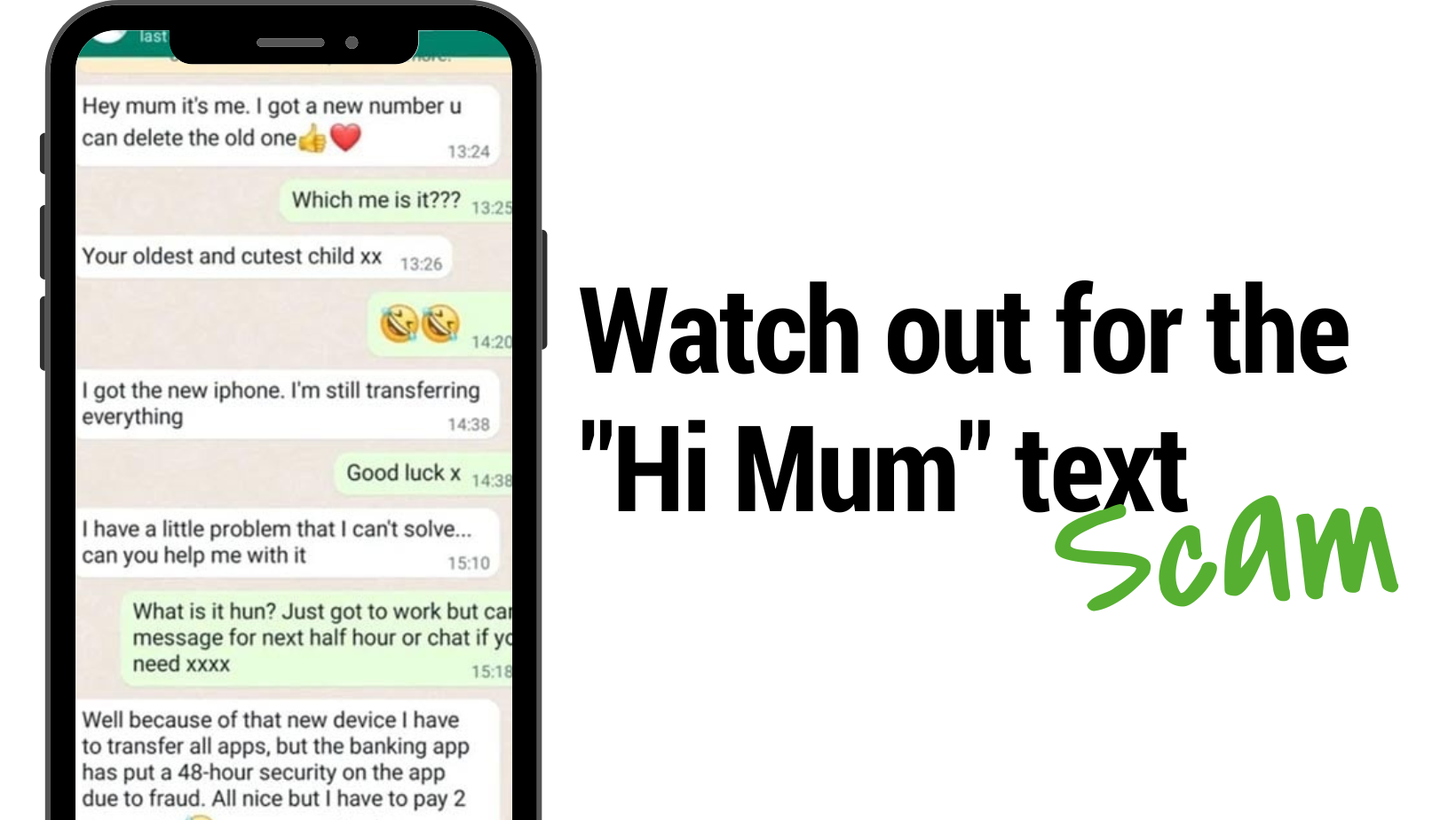
Known as “Hi Mum” or “family impersonation” scams, victims are contacted – most often through WhatsApp – by a scammer posing as a family member or friend.

The scammer will claim they have lost or damaged their phone and are making contact from a new number. Then, once they have developed a rapport with their target, the scammer will ask for personal information such as photos for their social media profile or money to help urgently pay a bill, contractor or replace the phone.

These requests continue the ruse of a lost or broken phone with the justification that the funds are needed because they can’t access their online banking temporarily.

Some messages will simply say “it’s me,” while in other cases the scammers appear to have contact information and use the name of the person they are impersonating.

“We have seen an explosion in the number of ‘Hi Mum’ scams in the past couple of months, and so we are warning Australians to be very wary of messages from unknown numbers claiming to be from their children, parents, relatives or friends,” ACCC Deputy Chair Delia Rickard said.

“Scammers will stop at nothing to get your personal details or money and this particular scam is designed to pull your heartstrings. It’s important to stop and think if you get a message, especially on WhatsApp, because chances are it’s not your family member or friend – it’s a scammer.”

The ACCC is urging people who receive suspicious messages from a number they don’t recognise, to independently verify the contact.

“If you’re contacted by someone claiming to be your son, daughter, relative or friend, start by calling them on the number already stored in your phone to confirm if it’s no longer in use. If they pick up – you know it’s a scam,” Ms Rickard said.
“If unable to make contact, you should try a secondary contact method to verify who you’re speaking to. If you still can’t contact your family member or friend, consider asking a personal question a scammer couldn’t know the answer to, so you know the person you are speaking to is who they say they are.”

“Above all, never send money without being absolutely sure who you are sending it to,” Ms Rickard said.

Over two-thirds of family impersonation scams have been reported by women over 55 years of age, accounting for more than $1.4 million in losses.

“Unfortunately, these unscrupulous scammers are targeting women and older Australians, with 82 per cent of family impersonation scams reported by people over the age of 55, accounting for 95 per cent of all reported losses,” Ms Rickard said.

“If you have reason to believe you have been scammed, contact your bank as soon as possible as they may be able to find where the money went, block scam accounts and help others to avoid sending money to scammers.”

People who detect a scam, regardless of whether they have lost money, can report scams and learn more about how to get help on the Scamwatch website at scamwatch.gov.au

They can also follow @scamwatch_gov on Twitter and subscribe to Scamwatch radar alerts to keep up to date with advice for avoiding the latest scams circulating in the community.

If you have provided personal information, as most victims have, contact IDCARE immediately.

More information about scams can be found in the ACCC’s latest Targeting Scams report.

Background

The ACCC-run Scamwatch aims to raise awareness about how to recognise, avoid and report scams. It shares intelligence and works with government, law enforcement and the private sector to disrupt and prevent scams.

If you have experienced a loss online and believe the perpetrator is in Australia, you can report the scam to ReportCyber. ReportCyber triages all reports and allocates to the relevant law enforcement authorities for further action.

For crisis support to help with emotional distress about scams contact Lifeline on 13 11 14 or access support via the online chat between 7pm and midnight www.lifeline.org.au. Beyond Blue also provides support for anxiety and depression 1300 22 4636 or chat online www.beyondblue.org.au

Media enquiries: 1300 138 917
Email: media@accc.gov.au