
The hidden cost of older homes

Older homes are big on charm but low on energy efficiency.

There’s a lot to love about older homes, but they can be less energy efficient than modern buildings, and that can see home owners facing higher power bills.

With summer in full swing many of us will be relying on air con to stay cool in the weeks ahead. It works. But it can be expensive if you don’t have solar or are using it in the evenings without a battery.

In fact, around 40% of our annual power bill goes towards home heating and cooling[1] . But not all homes feel the heat (or cold) equally. New research by CoreLogic shows that homes built after 2010 tend to be twice as energy efficient as those built prior to 2010[2] . The difference reflects the gradual introduction of a minimum 6-star rating for energy efficiency for newly built homes since 2010.

What it means for you

According to CoreLogic, new homes built since 2010 have a median star rating of 5.9 out of a possible 10. By contrast, homes built prior to 2010 have a median rating of just 2.8 stars. Having a home with a higher star rating doesn’t just mean bragging rights for home owners.

A high energy rating can translate into serious savings on household power bills. It makes energy efficiency an important issue for all home owners. The good news is that there are ways to improve an older home’s energy rating – even on a tight budget.

Simple changes can deliver big savings

Boosting your home’s energy efficiency doesn’t have to involve a major makeover. One of the most effective steps you can take is to install roof and ceiling insulation. This alone can cut heating and cooling costs by a whopping 45%[3] . Another simple step, draught sealing, can cut up to 25% off your power bill[4] .

Making the shift from gas appliances to electrical can see you save $898 annually on power costs[5] . These are big savings at a time when we’re all juggling a cost of living squeeze.

Energy efficient homes can be attractive to buyers – and could command a better price

Slashing power bills is a pretty compelling reason to look at ways to ‘green’ your home. It’s not the only reason though. A report by Domain found two-thirds of home buyers prefer energy-efficient homes[6] . And they’re happy to pay extra.

The so-called ‘green premium’ can add around $122,000 to the value of houses. Energy efficient apartments can command about $70,000 more at sale time.

How to fund a green makeover for your home

It all adds up to smart reasons to take a closer look at how you could make your place more energy efficient – especially as Community First has a low cost solution to pay for your projects.

Our Green Loan can help you fund the cost of environmentally friendly home improvements, turning your home into a more comfortable place to live, while letting you pocket valuable savings on utility bills.

With a low rate, terms ranging from 1 to 10 years, and the flexibility to pay out your loan early without penalty plus redraw payments in advance, our award-winning Green Loan can be used for a variety of projects.

No matter whether you’re planning to add solar panels, rainwater tanks, insulation, double glazing – and a whole lot more –talk to us about a Green Loan or apply online today.


Credit eligibility criteria, terms & conditions, fees & charges apply.
[1] https://www.climatecouncil.org.au/wp-content/uploads/2023/04/CC_MVSA0353-CC-Report-Two-for-One-Home-Energy-Efficiency_V5.2-FA-Screen-Single.pdf
[2] https://www.corelogic.com.au/__data/assets/pdf_file/0026/25388/AmpedUp_CoreLogic_Dec24_Report.pdf
[3] https://www.yourhome.gov.au/passive-design/insulation
[4] https://www.yourhome.gov.au/passive-design/ventilation-airtightness
[5] https://www.climatecouncil.org.au/wp-content/uploads/2023/04/CC_MVSA0353-CC-Report-Two-for-One-Home-Energy-Efficiency_V5.2-FA-Screen-Single.pdf
[6] https://s3.ap-southeast-2.amazonaws.com/ffx.adcentre.com.au/domain/2024/CRTV-3293/Domain+Sustainability+in+Property+Report.pdf

Important update for cards in your mobile wallet

If you use your debit card through a mobile wallet like Apple Pay, Google Pay, or Samsung Pay, there’s an important update you need to be aware of. A small number of multi-network debit cards need to be updated to ensure uninterrupted service starting 1 January 2025.

Here’s what you need to know

The debit card stored in your mobile wallet needs to be updated. To ensure uninterrupted payments, you must remove the card from your mobile wallet and re-add it before 31 December 2024. This update affects only debit cards in mobile wallets and does not impact:

Plastic debit cards – Your physical card will work as usual.
Credit cards – These are not affected by the update.

Why is this necessary?

The update involves refreshing an expiry date associated with your debit card in the mobile wallet system. Rest assured, this is not a security issue, and no data has been compromised.

How to Update Your Card

Open your mobile wallet (e.g., Apple Pay, Google Pay, or Samsung Pay).
Remove your digital debit card.
Re-add the card by following the wallet’s setup process.
Once added, your card is ready to use without any disruptions.

What happens if I don’t update?

If you don’t update your card by 31 December 2024, you may experience declined transactions starting 1 January 2025. Simply completing the steps above will resolve the issue.

Common Questions

Q: Will my physical debit card be impacted?

A: No, this update only applies to cards stored in mobile wallets. Your physical debit card will continue to work as normal.

Q: Does this affect my credit card?

A: No, this update only applies to payments made using debit cards via eftpos in mobile wallets.

Q: Has my card or phone been compromised?

A: Not at all. This is purely a technical update to ensure transactions are processed correctly. Your data and card information remain secure.

Need Help?
If you have any questions or need assistance updating your card, please contact us on 1300 13 22 77. 

Changes to credit card fees

We’ve recently made changes to some of our credit card fees

A change to our Low-Rate Credit Card

Our Low-Rate Credit Card has long been recognised by industry awards for its outstanding value. Since interest rates were at an all-time low, and throughout a rising interest rate environment, our card has continued to offer one of Australia’s lowest ongoing credit card rates of 8.99% p.a.* on purchases and cash advances. In fact, we haven’t passed on any rate increases in over 6 years.

The good news is that the great value interest rates on our Low-Rate Credit Cards are not changing. However, we will be making a change to some fees on 1 December 2024.

Low Rate Credit Card Annual Fee – the current annual fee of $40 will increase to $50*
Domestic Cash Advance Fee – this new fee will apply to all Domestic Cash Advance transactions moving forward and will be charged at $2 per transaction.

*If you hold a Pink Low-Rate Credit Card (also known as McGrath Pink Visa), half the annual fee ($25) is donated to the McGrath foundation each year you hold the card. If you hold a Blue Low-Rate Credit Card (also known as a PCFA Blue Visa), half the annual fee ($25) is donated to the Prostate Cancer Foundation of Australia each year you hold the card.

Together, we can continue to make a difference

A key feature of our cards is that half the annual fee of Pink Low-Rate Credit Cards is donated to the McGrath Foundation and half the annual fee of Blue Low-Rate Credit Cards are donated to the Prostate Cancer Foundation of Australia. As half the annual fee is donated each year, the increase to the annual fee on Pink and Blue cards will mean an additional $5 per year will be donated. This valuable contribution helps these foundations to continue their important work in the community.

What is a Domestic Cash Advance?

A Domestic Cash Advance includes transactions in Australia where you are taking cash out. This could be cash out with a purchase, withdrawing cash at an ATM in Australia and transferring funds out of your credit card account. These types of transactions will incur a $2 fee each time they’re performed. Note that cash advances are not eligible for interest free days and will incur interest from the day they are made until they are repaid in full.

From 1 December 2024, Overseas Cash Advance fees and Domestic Cash Advance fees will also be charged on the day the transaction occurs. Please note that when a balance transfer offer is in progress, once the introductory period expires it will revert to the cash advance rate. A Domestic Cash Advance includes transactions in Australia where you are taking cash out. This could be cash out with a purchase, withdrawing cash at an ATM in Australia and transferring funds out of your credit card account. These types of transactions will incur a $2 fee each time they’re performed. Note that cash advances are not eligible for interest free days and will incur interest from the day they are made until they are repaid in full.

You can view our fees and charges schedule here. If you have any questions about these changes, please give us a call or visit us at your nearest store.


Last updated: 2 December 2024

The information contained in this article is only correct at the point of time of publication. It is general information and has been prepared without taking into account your personal circumstances, objectives or needs. Please consider if this information is right for you before making a decision to acquire any product.

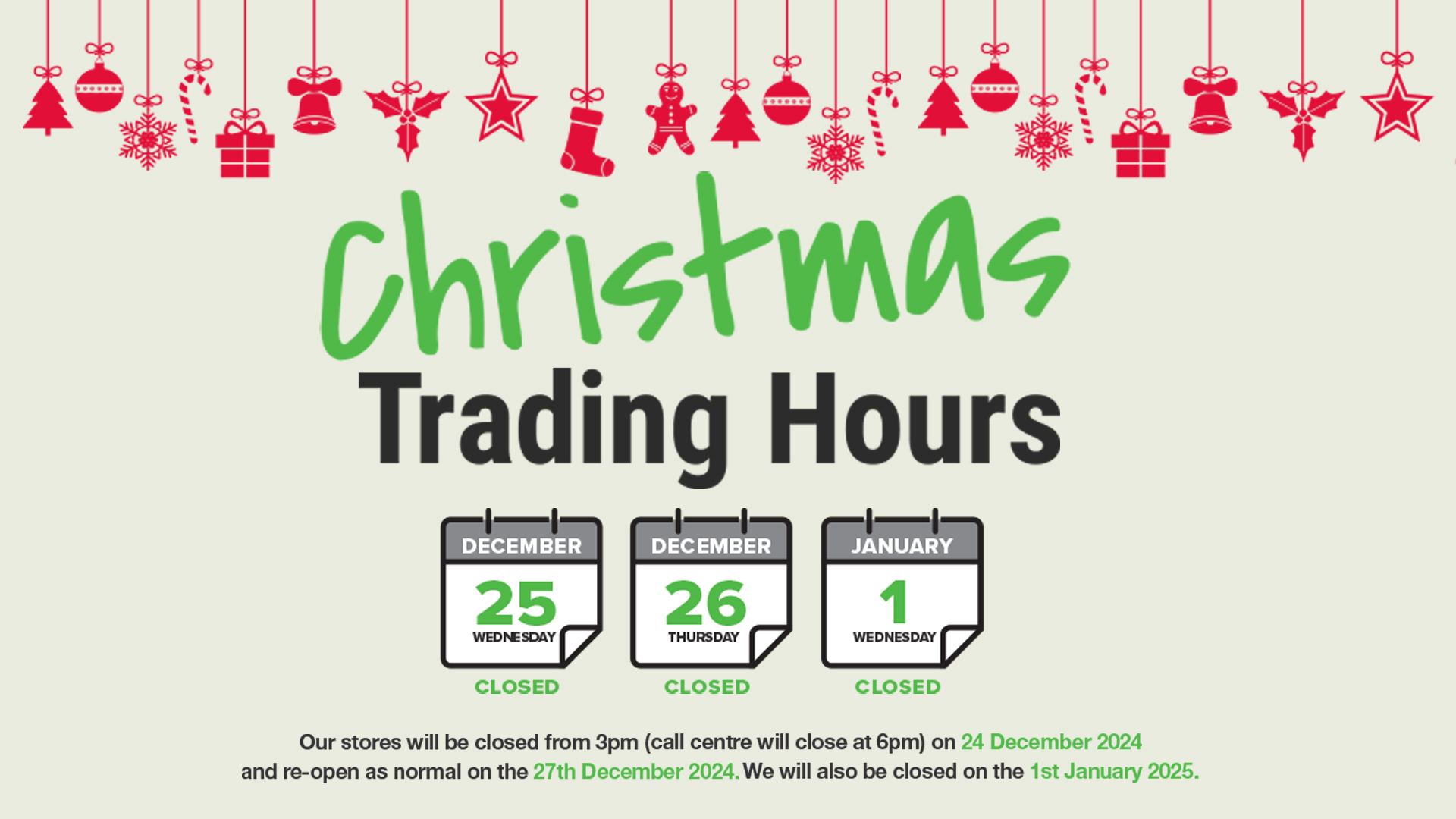
Christmas and New Years opening hours

Check out when our stores and call centres will be closed during the holiday season.

Our stores will be closed from 3pm (call centre closes at 6pm) on Tuesday 24 December 2024 and re-open as normal on 27th December 2024. We will also be closing out stores at 3pm (call centre closes at 6pm) on the 31st December and re-open as normal on 2nd January 2025.


You can still check your account balances or make transfers using CFB Internet Banking and Mobile Banking. Hope you have a happy and safe holiday season.

Exciting News! The merger vote has been approved!

Exciting news – the merger has been approved.

We are excited to announce that members of Community First Credit Union and Illawarra Credit Union have voted in favour of the merger following the Special General Meetings of both organisations on Thursday 12 December 2024. This pivotal decision marks the beginning of an exciting new chapter for both financial institutions, by enhancing our resources, capabilities, and ability to serve our members and community.

We are equally thrilled to be welcoming members of Illawarra Credit Union into the Community First family. Please stay tuned for more updates on what this merger means for you, our members, and our communities.

An exciting step forward

By combining our strengths into one, larger community-focused financial institution, we are better positioned to meet the needs of our members while maintaining our high standards of service.

This merger will create valuable member benefits, setting the stage for future growth and expanding our reach.

With almost 80,000 members, and combined assets of approximately $2.5 billion, the new entity is primed to build greater strength and resilience in today’s competitive banking market.

What’s next?

The amalgamation of two financial institutions is no small feat, and teams across both organisations are working together to ensure a smooth transition for all members.

The transfer of business will take place in early 2025, with the system integration later in the year. Rest assured, we’ll be keeping members up to date with what changes to expect and will be working to ensure there is as little disruption as possible.

You can refer to our website or reach out to our friendly team at any time if you have any questions in relation to the process.

Value of Aussie homes tops $11 trillion

It’s official—residential real estate is helping Australians grow their personal wealth. This highlights the value of entering the market as a homeowner or investor.

Australia’s bricks-and-mortar market has reached a major landmark, with residential real estate reaching $11 trillion for the first time. This reflects an impressive increase of $900 billion over the past 12 months, according to CoreLogic’s October Monthly Housing Chart Pack 1 .

Perth produced the highest annual growth, with values climbing by 24.1%, driven by solid demand and limited supply. Sydney, Brisbane, and Adelaide have also hit record highs, with Brisbane up by 14.5%, Adelaide rising by 14.8%, and Sydney seeing a 4.5% increase in dwelling values over the year to September.

But when it comes to real estate, it can be a case of swings and roundabouts. Melbourne and Hobart recorded quarterly and annual dwelling declines, respectively -5.1% and -12.5% below their record highs recorded in March 2022. Meanwhile, regional housing markets experienced a quarterly increase of 1.0%, down from 2.3% in the three months to April, a deceleration to that seen in the capital cities.

What drives property growth?

Whether it’s your first home or your fourth investment, a property is a significant venture. However, if you get it right, it can deliver long–term gains and decent rental income for investors.

But what really drives the value of a property? Let’s explore some essential factors that influence a property’s value.

  1. Location, location, location

It’s no secret that the old real estate agent’s mantra of “location, location, location” is a key factor in determining property values and long-term growth. But what exactly makes a great location? When house hunting, aspiring buyers should keep an eye on factors such as proximity to transport, schools, hospitals, shops, and entertainment options—think cafes, cinemas, and parks.

Properties with a great view can also be a real winner, providing long-term value. When looking at a property, consider what future buyers will love about it—whether it’s a stunning city, water, or mountain view or even a peaceful outlook over green spaces like golf courses. On the other hand, properties in areas lacking conveniences or outlooks may struggle to increase in value over time.

  1. The condition of a property

Properties that are well-maintained and feature updated amenities usually attract better prices when selling or renting. Simple steps such as regular maintenance and freshening up the decor can all help boost the property’s value. Many buyers and renters are happy to pay a little extra for a move-in-ready property that doesn’t require immediate repairs.

An investment property that attracts reliable tenants on long-term leases is a great asset. Keeping your property well-maintained and offering features renters want can also improve its attractiveness, ensuring it stays in demand.

  1. Supply and demand

The theory of supply and demand can play a significant role in property values whether you live in Sydney or a small country town. When buyer demand for properties in a particular area exceeds the available supply of properties for sale, prices naturally climb.

Investors and homebuyers who can spot emerging hotspots—areas where demand is poised to outpace supply—stand to gain from future price growth. A hotspot is often an overlooked location that hasn’t yet caught the eye of buyers, unlike the nearby blue-chip, typically more expensive suburbs or towns. Identifying these areas early can be a lucrative strategy for generating decent long-term returns.

  1. Infrastructure development and population growth

A major road, railway station, school, or shopping centre could boost buyer or investor demand. When considering a location, it’s generally sensible to be mindful of upcoming infrastructure that could increase a property’s value.

Additionally, population growth can underpin property values. Likewise, locations with employment prospects or new infrastructure developments can attract more residents, further boosting demand for local homes and rental properties.

  1. Other factors beyond your control

Buyers and investors don’t have a say in the overall health of the broader economy. Yet influences such as economic growth and interest rates can affect property values.

For instance, when the economy is strong, higher employment, wage growth, and consumer confidence can drive housing demand. On the flip side, in downturns, property values may stagnate or dip because of buyer caution.

Likewise, interest rates can also impact property values. When interest rates are lower, buyers can borrow more – a factor that can underpin more substantial property prices. However, when rates rise, as we’ve discovered in recent times, this can limit the borrowing power of investors and homebuyers and sway property values.

Federal, state, and local government policies can also shift real estate values. Changes to tax incentives, zoning laws, or first-homebuyer incentives can affect property values. Investors and homebuyers need to monitor new legislation that could impact the market closely.

  1. Market sentiment

Market sentiment is another factor outside your control that can impact property values. When home buyers and investors feel confident about the market, property values tend to rise. However, during uncertain times and economic downturns, property values may stagnate. It’s all about the mood of the market.

To learn more about financing your next property move, call the Community First team on 1300 13 22 77, or visit one of our Community First stores.


1https://www.corelogic.com.au/news-research/news/2024/australian-property-market-reaches-$11-trillion-as-national-price-growth-slows

Delay to Currency Conversion Fee changes

Changes to our Currency Conversion Fee have been delayed

Changes to our Currency Conversion Fee and international transactions have been delayed

We previously communicated that from 1 December 2024, we’ll be updating our Summary of Accounts, Availability of Access Facilities and Transaction Limits, Conditions of use and Fees and Charges to reflect changes to when international conversion fees may apply.

Please note these changes have been delayed until 9 April 2025.

What are the changes?

Community First charges a Currency Conversion Fee of 3% of the transaction value in AUD when you use your Visa card (debit of credit) for a foreign currency transaction or where an Australian dollar transaction is processed outside Australia.

The changes aim to clarify that the fee will also apply where the merchant, financial institution or entity processing the transaction is located overseas (even if in Australian currency and may include refunds and reversals). It will also apply to any instance where it is considered by Visa to require conversion into Australian currency.

Sometimes, overseas merchants, financial institutions or intermediaries allow you to pay for a transaction in Australian dollars or allow you to choose the currency for purchases (also known as Dynamic Currency), however this is still classified as an international transaction because your transaction is processed overseas. This can apply whether the transaction is made in person, over the phone or online. It may also apply to websites that end in .com.au and that displays prices in Australian dollars. It may not always be clear when a transaction may be an international transaction. You should check with the merchant if you’re unsure.

Moving forward the Currency Conversion Fee will now be known as an International Transaction Fee.


Last updated: 14 February 2024

The information contained in this article is only correct at the point of time of publication. It is general information and has been prepared without taking into account your personal circumstances, objectives or needs. Please consider if this information is right for you before making a decision to acquire any product.

Australians set to spend $1,000 each on Christmas

Ready for the festive season? With just weeks remaining until Christmas Day, we look at simple strategies to help you shop smart and save.

It’s that time of year when stores compete for shoppers’ wallets, and for consumers that can make the holiday season a real budget buster. Research by Deloitte shows consumers are planning to spend an average of around $1,000 each on Christmas this year 1 .

But faced with tight budgets, we’re searching harder than ever for bargains and discounts.

The Deloitte report found 95% of shoppers say scoring a bargain is the main game this holiday season, and nearly one in three will walk away from a purchase if there’s no discount involved.

So, how can you maximise the bargains?

Easy – and it doesn’t involve being a Grinch. Just try these four ideas to keep a lid on spending while enjoying all the fun of the festive season.

  1. Don’t feel obliged to buy everyone a gift

The kid’s teachers, great aunty Ethel, second cousin Simon who you only see once a year…we can feel pressured into giving everyone we know a gift at Christmas.

Here’s the thing.

Not everybody wants to receive a present.

A survey by the Australia Institute found nearly half (48%) of us would rather people didn’t buy them gifts at Christmas 2 . So, if someone tells you not to bother buying them a gift, chances are they mean it. So, why not take the hint and save the cash?

  1. Tech the halls to snag the festive deals

With Christmas fast approaching, online shoppers can make the most of comparison tools to find the best deals for the festive season. If you’re a regular Amazon shopper, for instance, check out CamelCamelCamel, an Amazon price tracker that offers price drop alerts and detailed price history charts for Amazon products.

Each product page features graphs displaying price fluctuations over time, including high, low, and average prices.

There are also a variety of apps such as ShopSavvy and Price.com that allow you to compare prices across major retailers by simply scanning a barcode or snapping a photo of an item.

  1. Unwrap the smarter choices for Christmas gifting

A survey from Shop reveals that nearly half (47%) of Australians plan to buy clothing and shoes as gifts this Christmas, with books (46%) and gift cards (45%) also high on the list of popular choices for 2024 3

However, Monash University research shows these gifts may not always hit the mark. Last holiday season, clothing, footwear, and accessories topped the list of most returned items (55%), followed by books and stationery (35%) and consumer electronics (20%) 4 .

Gift cards remain a popular choice, offering a simple solution when you’re re unsure of what someone truly wants or needs. Yet even this gifting strategy doesn’t always hit the mark with one industry survey revealing Australians have a whopping $1.4 billion worth of unused gift cards 5 and that 35% of us have at least one gift card sitting unused in our homes and wallets. 

  1. Keep the festive cheer debt free

Between buying gifts for friends and family and juggling festive season catchups, it’s easy to lose track of your budget and overspend. This can quickly lead to reaching for a credit card or using buy now pay later (BNPL) to cover holiday season expenses.

A YouGov survey revealed that last Christmas, one in four Aussies relied on their credit card, while 16% turned to BNPL options . At the same time, over half (52%) of Australians reported dipping into their savings to cover the costs of Christmas.

As you plan your Yuletide celebrations, consider leaving the credit card at home and using a debit card. After all, nothing dulls the holiday cheer faster than waking up on January 1 with a sizeable Christmas debt hangover to manage . So, aim to keep the season joyful by spending within your means. 


1 https://www.deloitte.com/au/en/about/press-room/holiday-shoppers-tighten-purse-strings-cost-of-living-challenges-bite-170924.html
2 https://australiainstitute.org.au/post/oh-you-shouldnt-have-christmas-gift-waste-expected-to-top-900-million/
3 https://www.shopassociation.org.au/sites/default/files/uploaded-content/field_f_content_file/2024-australian-christmas-shopping-intentions-research-report-cpmaustralia-retailsafari-1.pdf
4 https://lens.monash.edu/@business-economy/2024/02/05/1386435/the-cost-of-christmas-cheer-christmas-gift-returns
5 https://www.skynews.com.au/australia-news/new-finder-survey-reveals-australians-have-14-billion-worth-of-unredeemed-gift-cards-with-average-of-198-per-person/news-story/47bac34f12d5e143e54d24b67112e135
6 https://au.yougov.com/consumer/articles/48217-baby-boomers-and-gen-z-to-cut-back-on-christmas
7 https://www.finder.com.au/news/aussies-in-christmas-debt-2024?timestamp=1731900036747

Changes to our Term Deposit Interest Rates

We’ve recently changed some of our Term Deposit interest rates

Changes to Term Deposit interest rates

Effective Wednesday, 20 November 2024, a number of Term Deposit interest rates have changed:

Balances $5,000 – $49,999 & Balances $50,000-$99,999

  • Interest rate for 3 month terms have increased by 0.10% p.a.
  • Interest rate for 12 month terms have decreased by 0.05% p.a. 
  • Interest rate for 2 year terms have decreased by 0.15% p.a. 
  • Interest rate for 3 year terms have decreased by 0.25% p.a. 

Balances $100,000 – $249,999 & Balances $250,000-$1,000,000

  • Interest rate for 3 month terms have increased by 0.10% p.a.
  • Interest rate for 12 month terms have decreased by 0.05% p.a. 
  • Interest rate for 2 year terms have decreased by 0.15% p.a. 
  • Interest rate for 3 year terms have decreased by 0.25% p.a. 

To view our current Term Deposit interest rates, click here


Last updated: 20 November 2024

The information contained in this article is only correct at the point of time of publication. It is general information and has been prepared without taking into account your personal circumstances, objectives or needs. Please consider if this information is right for you before making a decision to acquire any product.

Change to our Overlimit Feee

We’ve recently made a change to our Overlimit fee

Change to our Fees and Charges

Effective Friday, 1 November 2024, we reduced our Overlimit fee from $30 per month to $10 per month.

An Overlimit Fee is charged when an account remains over limit by $50 or more for 1 day or more during a calendar month. This fee is charged on the day of the dishonour.

To view our current Fees & charges schedules, click here.


Last updated: 1 November 2024

The information contained in this article is only correct at the point of time of publication. It is general information and has been prepared without taking into account your personal circumstances, objectives or needs. Please consider if this information is right for you before making a decision to acquire any product.